

You Learned to Put Yourself Last.
That Doesn’t Mean You Have To Keep Doing It.
Self-Deprioritization as a Conditioned Pattern in Helping Professionals
Self-Compassion Check-In
A brief reflection on how you treat yourself in difficult times
This is the Self-Compassion Scale – Short Form (SCS-SF), a 12-item instrument developed by Raes, Pommier, Neff, and Van Gucht (2011) based on Kristin Neff’s pioneering self-compassion research at the University of Texas at Austin.
There are no right or wrong answers. This is not a test. It is an invitation to notice, with curiosity and without judgment, how you typically relate to yourself when things get hard.
It takes about 3 minutes. Your responses are not stored or transmitted anywhere. They stay right here, with you.
Your Results
Compassionate Self-Responding
Uncompassionate Self-Responding
About this score: Neff suggests scores of 1.0–2.49 as low, 2.5–3.5 as moderate, and 3.51–5.0 as high self-compassion. These are ad hoc guidelines, not clinical cutoffs. The SCS-SF is most useful for personal reflection or tracking change over time, not for diagnosis. If your score surprised you, that is worth noticing with curiosity, not criticism.
Based on the Self-Compassion Scale – Short Form (SCS-SF)
Raes, F., Pommier, E., Neff, K. D., & Van Gucht, D. (2011). Clinical Psychology & Psychotherapy, 18, 250–255.
Learn more at self-compassion.org
The Helping Academy | mezzosolutions.com | Mezzo Solutions | Richmond, Indiana
Here is something you probably already know but have not said out loud in a while: you are really, really good at taking care of other people. You can read a room like a weather forecast. You know when someone is about to cry before they do. You have rearranged your entire schedule to accommodate someone else’s crisis more times than you can count.
And here is the part you might not have said out loud ever: you cannot remember the last time you did something just because it felt good. Not because it was productive. Not because it helped someone else. Not because it earned you the right to rest later. Just because you wanted to.
If that landed somewhere uncomfortable, stay with it for a second. Because this is not a lecture about self-care. You have had plenty of those, and if one more person tells you to take a bath, you might scream. This is about something deeper. This is about the pattern underneath the pattern. The one that makes you skip lunch without noticing. The one that makes rest feel like laziness. The one that convinced you, somewhere along the way, that your needs come last.
Researchers have a name for this. Well, researchers have several names for this, because researchers love naming things. But the one that matters most here is self-deprioritization, and it is not a personality flaw. It is a conditioned pattern. You learned it. Which means, with some patience and a lot of kindness toward yourself, you can unlearn it.
How the Pattern Gets Built
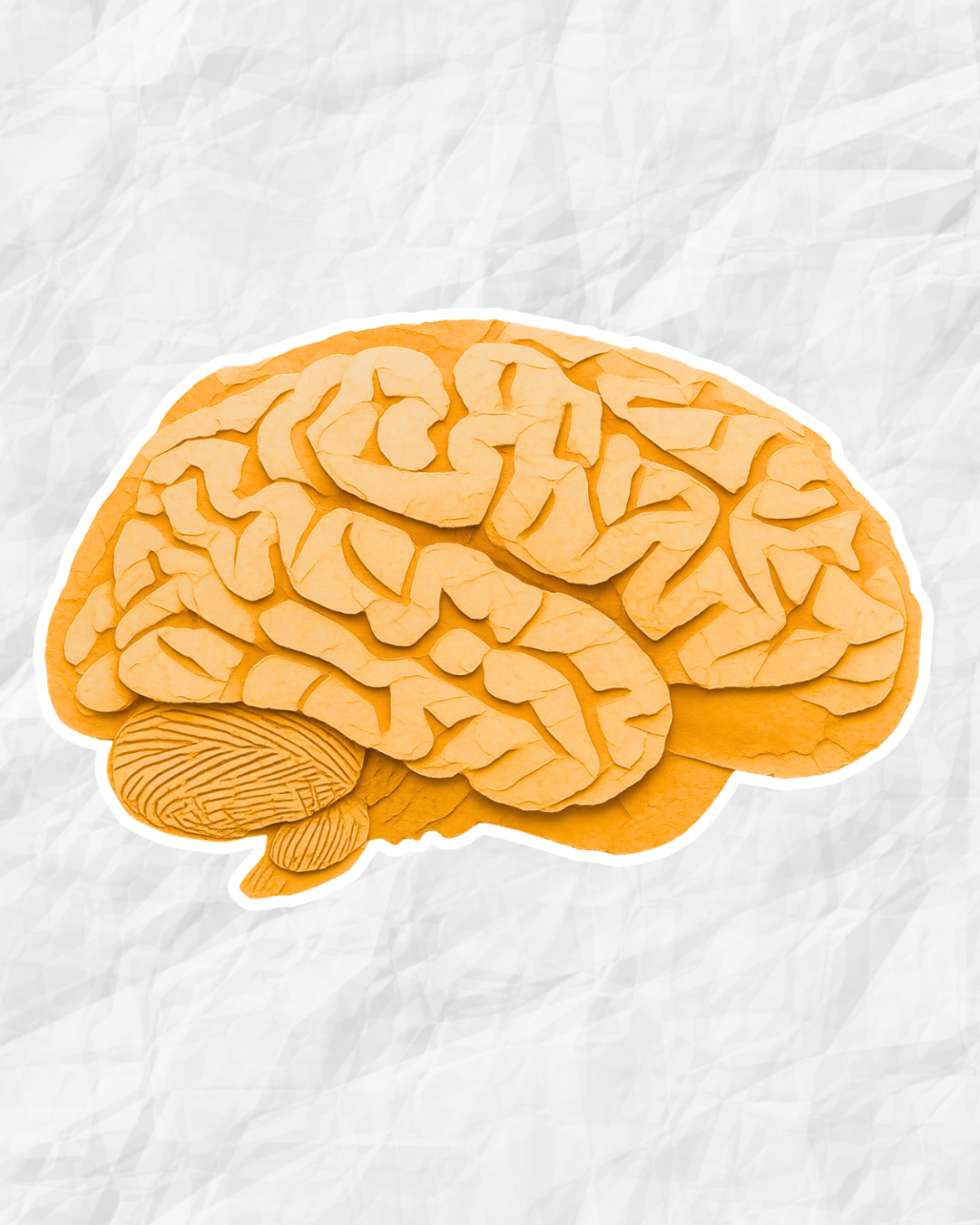
Think of your nervous system like a really efficient assistant. It pays attention to what gets rewarded and what gets punished, and it builds shortcuts accordingly. If you grew up in a home where being helpful meant being safe, your nervous system took notes. If your early career rewarded you for saying yes to everything, your nervous system underlined those notes and put them in a binder.
Think of your nervous system like a really efficient assistant. It pays attention to what gets rewarded and what gets punished, and it builds shortcuts accordingly. If you grew up in a home where being helpful meant being safe, your nervous system took notes. If your early career rewarded you for saying yes to everything, your nervous system underlined those notes and put them in a binder.
Over time, these shortcuts become automatic. You do not decide to skip your own doctor’s appointment to cover for a colleague. It just sort of happens. You do not consciously choose to eat lunch standing over the sink at 3 PM. The day just got away from you. Again.
This is what behavioral scientists call operant conditioning. The pattern gets reinforced because it works, at least in the short term. You take care of others, and you get positive feedback: gratitude, approval, a sense of purpose, a feeling of being needed. Your own needs? They are quieter. They do not send thank you cards. So they get pushed to the back of the line.
And here is the part that makes this particularly tricky for helping professionals: your entire professional identity is built around being attentive to other people’s needs. The same skills that make you extraordinary at your job, your empathy, your attunement, your willingness to show up, are the exact skills that can make self-deprioritization feel invisible. It does not feel like a problem. It feels like who you are.
The same empathy that makes you extraordinary at your job can make self-deprioritization feel invisible. It doesn’t feel like a problem. It feels like who you are.
What the Research Actually Says
Kristin Neff, a researcher at the University of Texas at Austin who essentially pioneered the scientific study of self-compassion, has been studying this for over two decades. Her work, along with colleague Chris Germer, produced the Mindful Self-Compassion (MSC) program, which has been taught by thousands of facilitators worldwide.
Here is one of her most important findings, and it is deceptively simple: people who score low on self-compassion consistently underinvest in restorative and intrinsically motivated activities, even when they cognitively know better.
Read that again. Even when they know better.
This is not a knowledge problem. You know you should take breaks. You know you should eat a real meal. You know you should use your PTO. The issue is not information. The issue is that somewhere inside you, there is a deeply practiced pattern that says: I do not deserve this right now. Someone else needs me more.
Neff’s research identifies three core components of self-compassion: self-kindness (treating yourself with warmth rather than harsh judgment), common humanity (recognizing that struggle is a shared human experience, not evidence that something is wrong with you), and mindfulness (being present with your pain without drowning in it or pushing it away).
Among helping professionals specifically, the research is striking. Studies have found that therapists, nurses, doctors, educators, and first responders with higher self-compassion report greater satisfaction in their work and significantly less burnout, compassion fatigue, and secondary traumatic stress. A 2020 study by Neff and colleagues found that a self-compassion training adapted specifically for healthcare communities produced meaningful reductions in secondary traumatic stress as measured by the Professional Quality of Life scale.
The connection to self-deprioritization is direct: when you lack self-compassion, self-care stops feeling like a reasonable thing to do and starts feeling like an indulgence you have not earned. The pattern feeds itself.
Why Knowing Better Is Not Enough
If you are a helping professional reading this, you almost certainly have a graduate degree. You have probably taught workshops on burnout prevention. You may have literally assigned readings on self-care to your students or supervisees.
And you probably still skip meals and answer emails at 11 PM.
This is not hypocrisy. This is how conditioned patterns work. The pattern lives in your nervous system, not in your intellect. You can know everything there is to know about nutrition and still reach for the vending machine when you are exhausted. You can understand the neuroscience of sleep and still stay up late charting because the guilt of leaving it undone feels worse than the tiredness.
Christina Maslach, the researcher who developed the most widely used measure of burnout, has consistently emphasized that burnout is not primarily an individual failure. It emerges from a mismatch between a person and their work environment. But self-deprioritization makes it worse, because it removes the very activities that could buffer you against those systemic stressors. It is like having a leak in the roof and also refusing to use an umbrella.
Self-deprioritization is not a personality trait. It is a strategy that helped you survive. And strategies can be updated.
Where Mindfulness Fits (And Where It Does Not)
Here is where we need to be honest with each other. Mindfulness has become one of those words that gets thrown around so much it has almost lost its meaning, like “synergy” or “wellness.” So let us be specific about what it actually does in this context.
Mindfulness, in Neff’s framework, is not about relaxation. It is not about clearing your mind. It is about noticing. Specifically, it is about noticing your own suffering without either amplifying it into a catastrophe or minimizing it into nothing.
For helpers, this is a very particular skill, because most of you are outstanding at noticing other people’s pain and absolutely terrible at noticing your own. Not because you are broken, but because you were trained that way. Literally. Your clinical training taught you to attune outward. Nobody gave you equal training in attuning inward.
A mindfulness practice, even a very small one, can start to interrupt the self-deprioritization pattern by creating a tiny gap between the stimulus (someone needs something) and your automatic response (drop everything and help). In that gap, there is room for a question: What do I need right now?
That question is not selfish. It is diagnostic. And you are very good at diagnostics.
But mindfulness alone will not fix a system that demands too much from its workers and gives too little back. Mindfulness is a personal tool, not a replacement for adequate staffing, livable wages, and manageable caseloads. It belongs in your toolkit, not in your job description as a substitute for institutional support.
Starting to Unlearn the Pattern
Unlearning self-deprioritization is not about a dramatic overhaul. It is about small, repeated disruptions to the pattern. Think of it less like renovating a house and more like gently redirecting a river.
Name it when it happens. The pattern is strongest when it is invisible. When you catch yourself skipping a break, saying yes to something you do not have capacity for, or feeling guilty about doing something enjoyable, try simply naming it: There it is. The pattern. You are not trying to fix it in that moment. You are just making it visible. That matters more than you think.
Practice the self-compassion pause. This is directly from Neff’s work and it takes about thirty seconds. When you notice you are struggling, try three steps: (1) acknowledge the difficulty, this is hard right now; (2) remind yourself that difficulty is part of being human, not evidence of personal failure; and (3) offer yourself the same kindness you would offer a colleague in the same situation.
Schedule one non-productive, non-helpful thing per week. Not exercise (that is productive). Not meal prep (that is helpful). Something that has no purpose other than the fact that you enjoy it. If you cannot think of anything, that is not a failing. It is data. It tells you how far the pattern has gone.
Check the guilt reflex. When you feel guilty for resting, ask yourself: would I feel this way about a colleague doing the same thing? If the answer is no, you are applying a double standard. That double standard is the pattern talking.
Talk about it with someone who gets it. Self-deprioritization thrives in isolation. Neff’s research on common humanity shows that one of the most powerful antidotes to self-judgment is recognizing that you are not the only one struggling with this. Supervision, peer consultation, or just an honest conversation with a trusted colleague can break the spell of “I should be handling this better.”
A Note About Systems
We would be doing you a disservice if we left this entirely at the individual level. The truth, backed by a significant body of research including a major meta-analysis published in JAMA Internal Medicine by Panagioti and colleagues (2017), is that organizational-level interventions are significantly more effective at reducing burnout than individual strategies alone.
Self-deprioritization does not happen in a vacuum. It happens inside systems that reward self-sacrifice, that confuse overwork with dedication, and that frame burnout as a personal weakness rather than a structural failure. If your workplace celebrates the person who never takes a sick day, that is not a wellness culture. That is a system teaching you to deprioritize yourself.
You can do the internal work of unlearning the pattern while also advocating for workplaces that do not require you to sacrifice yourself to do your job well. Both are necessary. Neither is sufficient alone.
Reflection Questions
Take a few minutes with these. You do not have to write anything down, but if you are the journaling type, that works too.
When was the last time you did something purely because you enjoyed it, with no other justification?
What story do you tell yourself when you consider taking a break? Is that story kind?
If a colleague described your schedule and habits back to you, would you be concerned about them?
Where did you first learn that your needs were less important than everyone else’s?
What is one small thing you could do this week that is just for you?
The Kindest Thing You Can Do
You became a helper because you care about people. That is a beautiful thing, and nobody is asking you to stop caring. But caring about people and disappearing yourself in the process are not the same thing, even though the pattern has convinced you they are.
The research is clear: self-compassion does not make you less effective at your job. It makes you more effective. It makes you more resilient, more present, and more available to the people you serve. Treating yourself with the same kindness you extend to everyone else is not a detour from your work. It is the foundation of it.
You learned to put yourself last. That made sense at some point. It kept you safe, or it kept you employed, or it kept other people happy. But patterns are not destinies. And you, of all people, know that change is possible. You watch people do it every day.
Now it is your turn.
