

Decision Paralysis and Rest: Why Helpers Freeze When They Finally Have Time Off
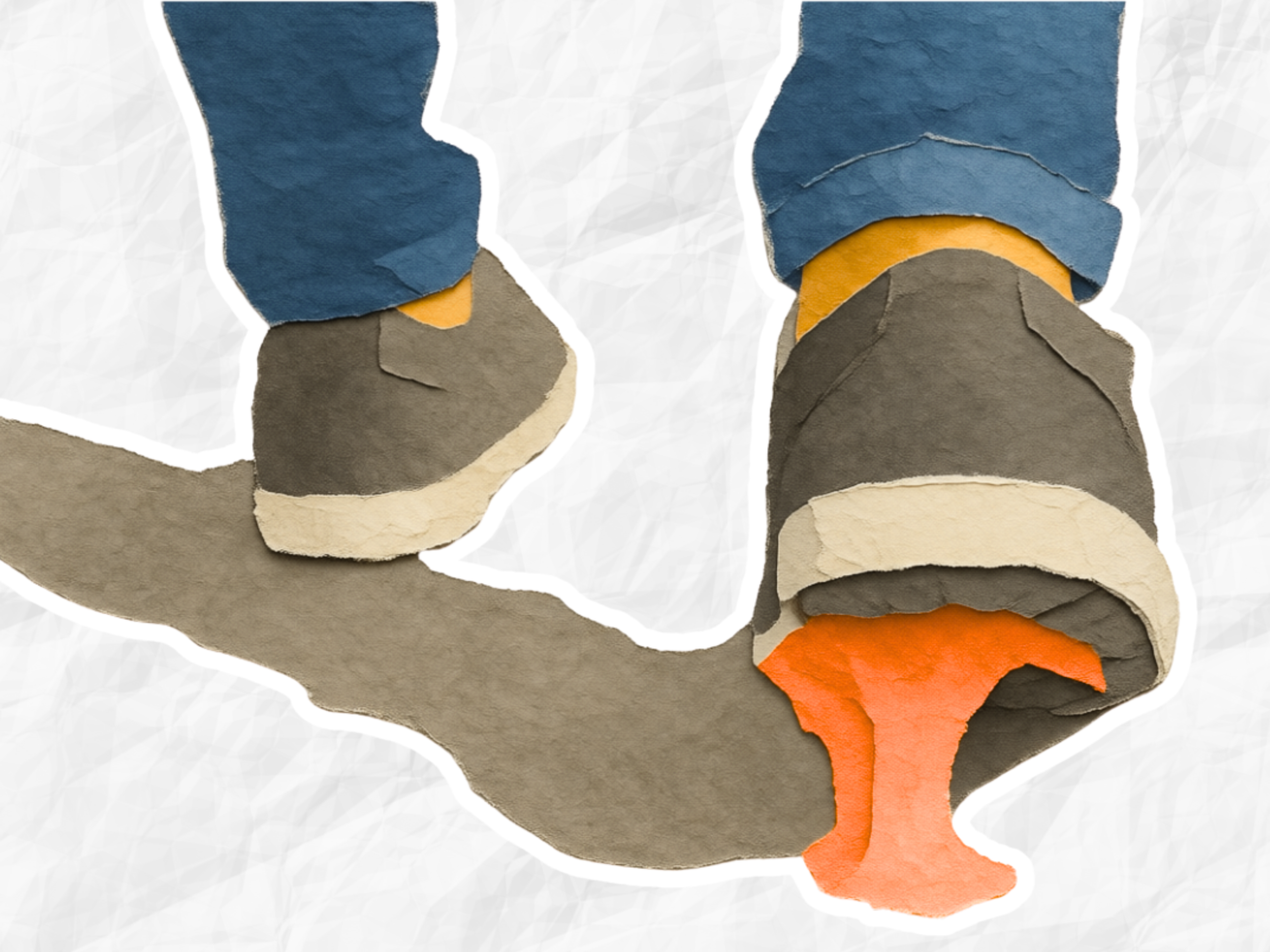
You have been waiting for this. A free afternoon. No responsibilities, no calls, nobody needing anything from you.
And now here you are, standing in your living room, phone in hand, scrolling through screens, and somehow ending up doing nothing.
Maybe you cleaned something. Maybe you made a list of restful things you could do. Maybe you Googled 'how to relax.'
Congratulations. You have successfully avoided resting.
This is not a personal failure. It is a well-documented human experience, made sharper by the particular kind of tired that helping professionals carry around.
There is a name for what is happening, and once you understand it, you might be a little kinder to yourself the next time you find yourself standing in that living room, frozen.
The Paradox of the Open Afternoon

Barry Schwartz, a psychologist then at Swarthmore College, spent years studying what happens when people are given too many options. His landmark 2002 study in the Journal of Personality and Social Psychology identified a fundamental split in how people approach decisions.
Some of us are 'maximizers' who search exhaustively for the single best option.
Others are 'satisfiers' who look until they find something good enough and then stop there.
Here is the part that matters for you: the more open-ended the choice, the more likely a maximizer is to stall, defer, or avoid deciding altogether. And when you are already depleted, that tendency grows stronger.
A free afternoon is not an invitation to rest. To an exhausted brain, it is an optimization problem with infinite variables and no correct answer.
This is decision paralysis functioning as avoidance. Not laziness. Not ingratitude. Avoidance.
Your nervous system, trained to respond and triage and attend to other people, does not know what to do when the directive is simply 'rest.' The structure is gone.
The purpose is unclear.
The stakes feel oddly high. So you do nothing, or you do several unsatisfying things, and Monday morning arrives with a faint sense that you wasted your time off.
Why Helpers Get Hit Harder

Your brain has been doing something all week that most people do not fully appreciate. It has been making an enormous number of decisions, large and small, about other people's wellbeing.
That takes something. Research on self-regulatory depletion suggests that deliberate decision-making draws on a limited resource, and when that resource is low, avoidance becomes the default response (Muraven & Baumeister, 2000).
Helping professionals work in a context of near-constant demand. You are responsive by training, by temperament, and by professional obligation. The structure of your workday tells you what to do and when.
That structure, as constraining as it can feel, is also cognitively protective. It removes the burden of choosing.
Free time removes that protection. Free time at the end of a hard week, when your reserves are already low, is when Schwartz's paradox bites hardest.
Netflix alone contains thousands of options. You could walk, call a friend, take a bath, read, cook, sit outside, or stare at the ceiling. The freedom that is supposed to be restorative becomes its own kind of weight.
What Mindfulness Actually Does Here

This is where mindfulness earns its reputation. And where it is often misunderstood.
Mindfulness is not, as it is sometimes sold, a way to relax. It is a way to notice. What you need to notice in that paralyzed moment is not how many options you have. It is what is already happening in your body right now.
Research on mindfulness-based interventions consistently points to one underappreciated skill: the capacity to tolerate present-moment discomfort without immediately trying to fix or escape it (Kabat-Zinn, 1990; Holzel et al., 2011).
That skill is exactly what decision paralysis works against. The paralysis is an escape attempt. The mind churns through options not because it wants to find the best one, but because searching feels more comfortable than sitting in the uncertainty of not knowing what to do with yourself.
A mindful pause does not mean you sit cross-legged and breathe for 20 minutes, though you can.
It means you stop and ask one small question:
what does my body actually need right now?
Not what should I do, not what would be most productive, not what counts as 'real' rest. What does my nervous system need in this exact moment?
That question sidesteps the paradox of choice almost entirely. You are no longer choosing from the full menu. You are checking in with one person.
The options collapse from infinite to a few, and the right one tends to become obvious pretty quickly.
Satisfying Your Rest (And Why That Is the Goal)
Schwartz's research draws a distinction between maximizers and satisfiers that is easy to misread.
Satisfiers are not people who settle for less. They are people who set a 'good enough' threshold and stop searching once they clear it.
Research consistently shows that satisficers end up more content with their choices than maximizers, even when maximizers technically chose a better option by objective measures.
Sit with that for a moment. You do not need the perfect rest. You need rest that is good enough to restore you. Those are very different problems, and the second one is actually solvable.
If you approach free time as a maximizer, optimizing, comparing, scrolling, you will exhaust yourself before you have rested at all. If you approach it as a satisficer, you give yourself permission to stop at good enough.
Go for the walk. Watch the thing. Sit on the porch. None of these need to be the ideal choice. They just need to clear the bar.
A Simple Framework for Getting Unstuck
When you catch yourself paralyzed in the face of free time, try this:
Stop scrolling or searching. The act of looking for options increases the number of options. Close the apps.
Do a brief body check-in. Place your hands on your belly or chest. Take two slow breaths. Ask: am I physically tired, mentally foggy, or emotionally drained? The answer points you toward rest that matches your actual need. Physical tiredness calls for lying down or moving gently. Mental fog calls for something low-demand and absorbing. Emotional depletion calls for connection or solitude, depending on who you are.
Choose anything that clears the threshold. It does not have to be the best option. It just has to be a real one. Act on it within two minutes of deciding.
Resist the urge to evaluate mid-rest. Maximizers suffer most after the decision, when they compare what they chose to what they could have chosen. If you catch yourself thinking 'I should have gone for a walk instead,' notice the thought and let it pass. That thought is not rest. It is avoidance in a different outfit.
Rest Is a Skill, Not a Reward
One more thing worth saying plainly. The difficulty you have resting is not a character flaw. It is what happens when someone spends years in a role that requires constant availability and responsiveness.
The nervous system learns. It gets good at what you do most.
Rest, for helping professionals, often has to be relearned. Not because you are broken, but because you have been trained.
Just as you would practice any professional skill, you can practice the skill of stopping. It gets easier. The paralysis fades. The threshold lowers.
Burnout research is increasingly clear that sustainable helping requires sustainable recovery. Not occasional heroic rest, but regular, genuinely restorative downtime (Sonnentag, 2001).
You cannot serve others from a depleted state. The field has known this for decades. The harder part, it turns out, is not believing it intellectually. It is doing it on a Tuesday afternoon when there are forty-seven things you could theoretically do and you end up in the kitchen, waiting for the right answer to appear.
The right answer is the one you choose in the next two minutes. Good enough. That is all it needs to be.
Reflection Questions
1. When you have unstructured time, do you notice yourself defaulting to scrolling, lists, or busy work? What does that behavior feel like in your body?
2. Are you more of a maximizer or a satisficer in your everyday choices? How does that pattern show up when it comes to your own rest?
3. What is one 'good enough' rest activity that you know restores you, even a little? What would it take to give yourself permission to start there, today?
Want to go deeper?
The Helping Academy offers workshops and professional development built specifically for helping professionals navigating burnout, sustainable practice, and workplace well-being. Visit
